Running a restaurant in 2025 isn’t just hard. It’s mentally exhausting.
Margins are thinner than they’ve ever been. Staffing feels unstable no matter how well you pay or train. Guest expectations shift faster than menus can be updated. And whether owners like it or not algorithms now influence who even finds your restaurant in the first place.
Most operators aren’t failing because they don’t care or don’t work hard enough. They’re failing because they’re stuck inside the business running service, covering shifts, solving fires with no real space to step back and see what’s actually broken.
That’s where a good restaurant consultant belongs.
Not as a critic.
Not as someone telling you what you “should have done.”
But as a thinking partner who understands the chaos, the pressure and the emotional weight of ownership and helps you turn movement into progress.
Below are five smart, grounded ways a restaurant consultant can improve operations in 2025 not by adding complexity but by bringing clarity.
1. Turning “Busy” Into Operational Efficiency
The trap:
Many restaurants are busy but still struggling.
Full dining rooms. Long tickets. Constant motion.
And yet, the numbers don’t reflect the effort.
Owners miss this because when you’re in the middle of service, busyness feels like success. But consultants look at a different metric: productive flow.
A restaurant consultant studies how work actually moves:
- Where tickets stall
- Where hands wait for tools or approvals
- Where steps are duplicated
- Where urgency replaces structure
They don’t ask, “Are you busy?”
They ask, “Is your effort producing margin?”
Small operational shifts line setup, prep sequencing, menu simplification, station responsibility often unlock more profitability than marketing ever could.
Efficiency isn’t about working faster.
It’s about removing friction that owners are too close to see.
2. Fixing Kitchen and Workflow Logic Without Breaking the Team
The pain point:
Most kitchens don’t suffer from lazy staff they suffer from unclear systems.
Menus grow over time. Stations evolve reactively. Prep lists become inherited traditions instead of intentional tools. Eventually, no one remembers why things are done a certain way only that changing it feels risky.
Owners often hesitate to touch this because:
- The kitchen is sensitive territory
- Long-time staff resist change
- Service pressure leaves no room to redesign
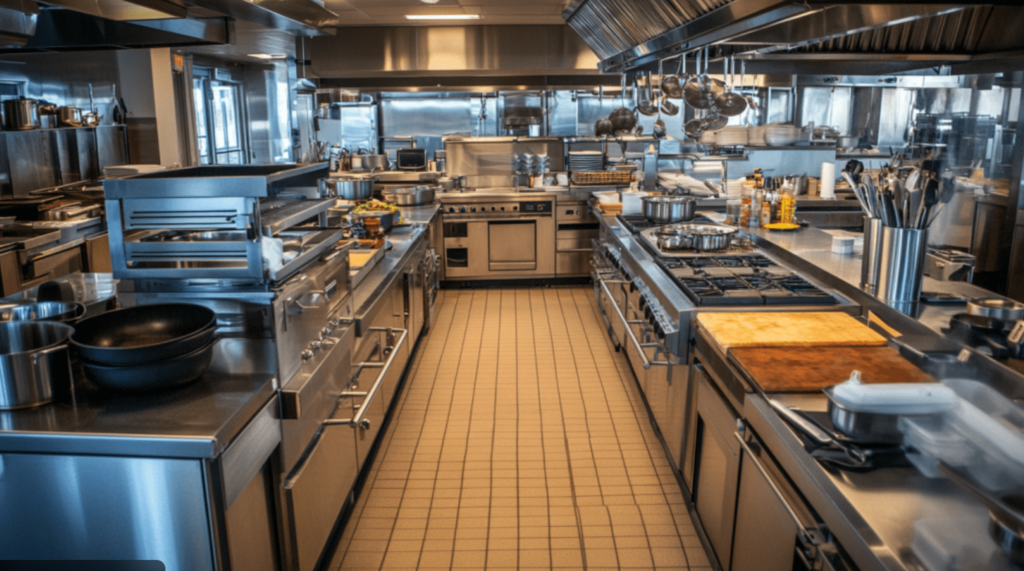
A restaurant consultant steps in with neutral eyes.
They map:
- Station responsibilities
- Prep-to-service alignment
- Ticket flow vs. line capacity
- Communication breakdowns between FOH and BOH
The goal isn’t to overhaul everything overnight.
It’s to create logic the team can trust.
When workflows make sense, kitchens calm down.
When kitchens calm down, mistakes drop.
When mistakes drop, margins quietly improve.
3. Closing the Margin Leaks Owners Normalize
The reality:
Most profitability issues don’t come from one big mistake.
They come from dozens of “small” leaks:
- Over-portioning
- Dead inventory
- Menu items that sell well but earn poorly
- Vendor creep
- Waste no one tracks anymore
Owners miss these because they’re normalized over time. What used to feel wrong slowly becomes “how we operate.”
A restaurant consultant isn’t emotionally attached to old habits. They look at:
- Food cost in motion, not just on paper
- Menu performance beyond popularity
- Inventory tied up in slow movers
- Prep practices that quietly increase waste
The fixes aren’t dramatic. They’re deliberate.
Better ordering rhythm.
Cleaner menu focus.
Smarter prep discipline.
The result isn’t austerity it’s control. And control is what gives owners breathing room again.
See also: How To Find the Best Business Software and Services: A Complete Technology Guide For 2025
4. Stabilizing Leadership and Culture Before Burnout Wins
The unspoken issue:
Most restaurants don’t have a staffing problem.
They have a leadership bandwidth problem.
Owners carry too much:
- Scheduling
- Discipline
- Training
- Emotional regulation
- Conflict resolution
Teams feel it. Morale dips. Turnover increases. Owners get more exhausted. The cycle tightens.
Consultants focus on how leadership shows up, not just what leaders say.
They help clarify:
- Decision ownership
- Communication standards
- Role accountability
- What “good” actually looks like on shift
This isn’t motivational fluff. It’s structure.
When expectations are clear and consistent, teams relax. When teams relax, retention improves. When retention improves, owners finally stop rebuilding every six months.
Strong culture isn’t loud. It’s predictable, fair and grounded.
5. Shifting Owners From Operators to Strategic Decision Makers
The long term risk:
Many restaurants survive year to year but can’t scale, stabilize or step back.
Owners stay trapped in daily execution because:
- Data feels overwhelming
- POS reports aren’t translated into decisions
- Growth feels risky without clarity
A restaurant consultant helps owners use data without becoming analysts.
They identify:
- What numbers actually matter
- Which decisions deserve attention
- When to adjust and when to hold steady
This is where hospitality consulting becomes strategic.
Instead of reacting to every problem, owners learn to:
- See patterns
- Make fewer, better decisions
- Think in quarters, not shifts
This shift is subtle but it changes everything. Restaurants stop depending entirely on the owner’s presence to function.
A Note on Perspective: Where 30 Percent Rule Fits
Consulting firms like 30 Percent Rule approach restaurants with an operator-first mindset. The focus isn’t theoretical frameworks or generic benchmarks — it’s understanding what actually happens during service, during prep, and during the moments owners feel most overwhelmed.
The value comes from experience:
- Knowing where chaos hides
- Knowing what not to change
- Knowing how to guide without disrupting trust
Good consultants don’t impose answers.
They help owners see their own business more clearly.
The Real Role of a Restaurant Consultant in 2025
Restaurant consultants aren’t just for failing businesses.
They’re for:
- Owners who want fewer fires
- Teams who need clarity
- Operations that should feel smoother than they do
The best ones don’t replace your instincts they sharpen them.
In an industry that glorifies hustle, consultants reintroduce structure. In an environment full of noise, they bring focus. In moments of burnout, they offer perspective.
Because the goal isn’t perfection. It’s a restaurant that works for the guests, the team, and the person who built it.